Since 1994 · Wenzhou plant · Built to API 608 / ASME B16.34 · Europe office in Budapestsales@bautu.comWhatsApp +36 30 713 3633
Pick the lowest class whose rating at your maximum design temperature is above your design pressure, and make sure it matches the flange class of the pipeline. For a WCB valve at ambient temperature, Class 150 is rated 19.6 bar, Class 300 51.1 bar and Class 600 102.1 bar (ASME B16.34). Ratings drop as temperature rises and are lower for stainless steel.
Class 150, 300 and 600 are pressure–temperature rating classes from ASME B16.34 (valves) and ASME B16.5 (flanges). The number is not a pressure in psi. Each class has a table of allowable working pressures that depends on two things: the body material and the working temperature. The higher the class, the thicker the body walls and flanges, the heavier the valve and the higher the price.
Allowable working pressure in bar (psi in brackets), ASME B16.34 standard class:
| Body material | Temperature | Class 150 | Class 300 | Class 600 |
|---|---|---|---|---|
| WCB (carbon steel) | −29 to 38 °C | 19.6 (285) | 51.1 (740) | 102.1 (1480) |
| WCB (carbon steel) | 200 °C | 13.8 | 43.8 | 87.6 |
| CF8 (304) | −29 to 38 °C | 19.0 (275) | 49.6 (720) | 99.3 (1440) |
| CF8 (304) | 200 °C | 13.2 | 34.5 | 69.0 |
| CF3M (316L) | −29 to 38 °C | 15.9 (230) | 41.4 (600) | 82.7 (1200) |
| CF3M (316L) | 200 °C | 11.2 | 29.2 | 58.3 |
Values from the ASME B16.34 standard-class tables. Always check the current edition for your exact temperature.
| Class | Typical service |
|---|---|
| Class 150 | Water and wastewater, cooling water, utilities, light chemical and general process lines |
| Class 300 | Steam, hot oil, higher-pressure process lines, oil and gas gathering lines |
| Class 600 | High-pressure oil and gas, compressor and pump discharge, high-pressure steam and boiler lines |
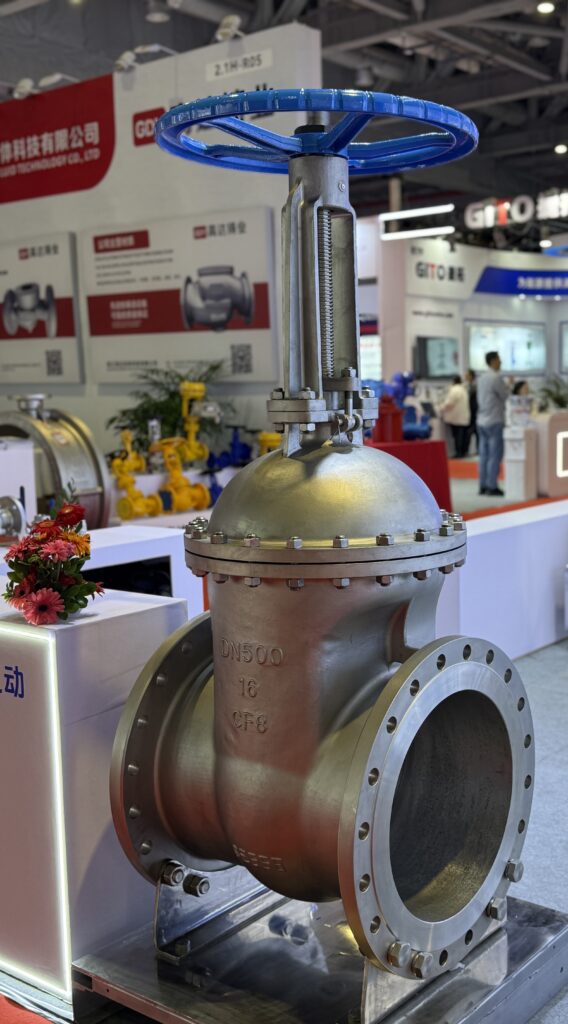
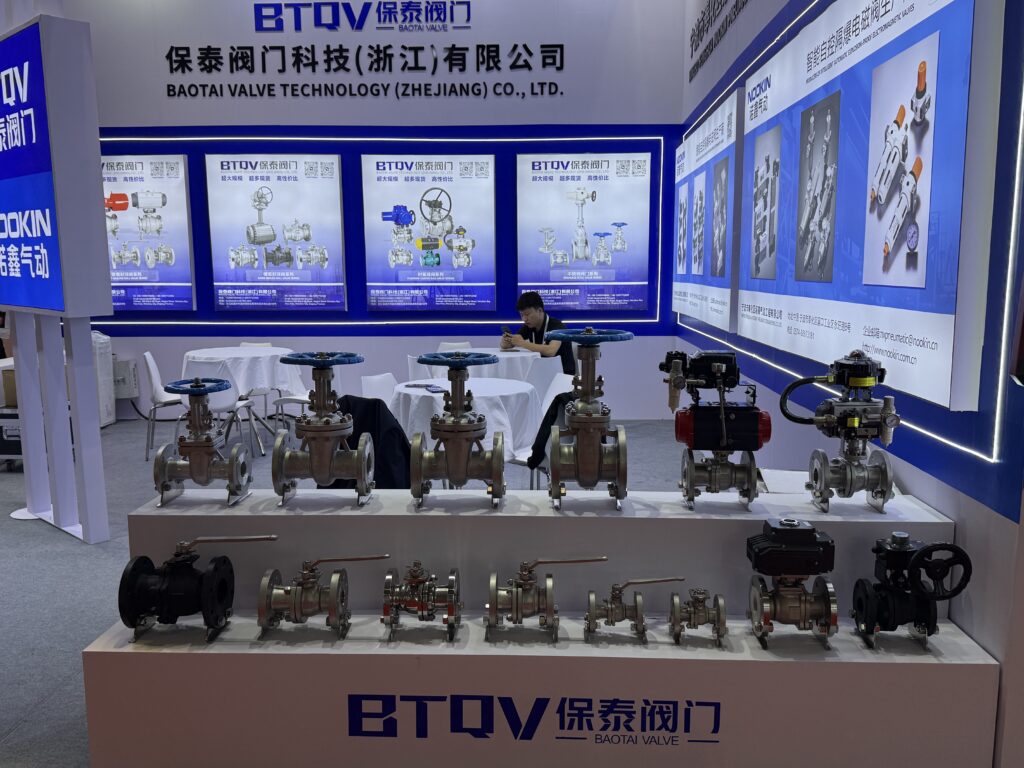
European and Chinese standards use PN ratings instead. As a rough guide, Class 150 sits near PN16–PN20, Class 300 near PN40–PN50 and Class 600 near PN63–PN100. The flange dimensions are different, so specify the system your pipeline uses — ASME, EN or GB — and do not mix them.
All valves are built to the standards below and tested per API 598. Body materials are WCB, CF8 and CF3M. Standard lead time is 15–20 days.
No. The class number is a rating designation, not a pressure. A Class 150 valve in WCB is rated 19.6 bar (285 psi) at ambient temperature, and that figure falls as temperature rises.
Ratings follow the strength of the body material. In ASME B16.34, CF8 (304) and especially CF3M (316L) have lower allowable ratings than WCB carbon steel, so a CF3M Class 150 valve is rated 15.9 bar at ambient against 19.6 bar for WCB.
Not directly. Class 300 flanges are thicker and have a larger bolt circle, so they do not bolt to Class 150 flanges. The valve class must match the flange class of the line, or you need a transition piece.
As a rough guide, Class 150 sits near PN16–PN20, Class 300 near PN40–PN50 and Class 600 near PN63–PN100. The flange dimensions are different, so ASME and EN/GB flanges are not interchangeable.
API 600 gate valves and API 623 globe valves in Class 150, 300 and 600; API 608 ball valves in Class 150 and 300; API 594 swing check valves in Class 150. Body materials are WCB, CF8 and CF3M.
Related guides: API 608 Ball Valves: What the Standard Covers · Soft-Seated vs Metal-Seated Ball Valves
